
In daily life in the Pacific Islands, there is a high-quality, breathable sarong for daily wear. This sarong is not just a piece of clothing, it is a reflection of the fusion of culture and comfort. As a practitioner who has been deeply involved in the textile industry in the South Pacific region for many years, I fully understand the challenge faced by retailers and resort purchasers: that is to find sarong products that can not only respect tradition, but also meet the needs of modern daily wear. This article will focus on how to choose breathable sarong fabrics that are truly suitable for daily wear, and analyze its market potential.
How to identify truly breathable everyday sarong fabrics
There are various types of sarong fabrics on the market, but not all of them are suitable for daily wear in high temperature and high humidity environments. The key lies in the fiber composition of the fabric and the weaving process. High-quality daily breathable sarongs are often made of 100% combed cotton or high-count cotton and linen blends. The fibers are long, tightly woven and breathable. You can use a simple To test, layer the fabric on the back of your hand, blow gently, and feel the smoothness of the airflow penetration. Another practical way is to observe the drying speed of the sarong after being soaked in water. In a ventilated place, high-quality fabrics can usually feel dry to the touch within half an hour, which is very important for resorts to provide guests with a comfortable feeling.
Why Durability Is Just as Important as Breathability in Everyday Sarongs
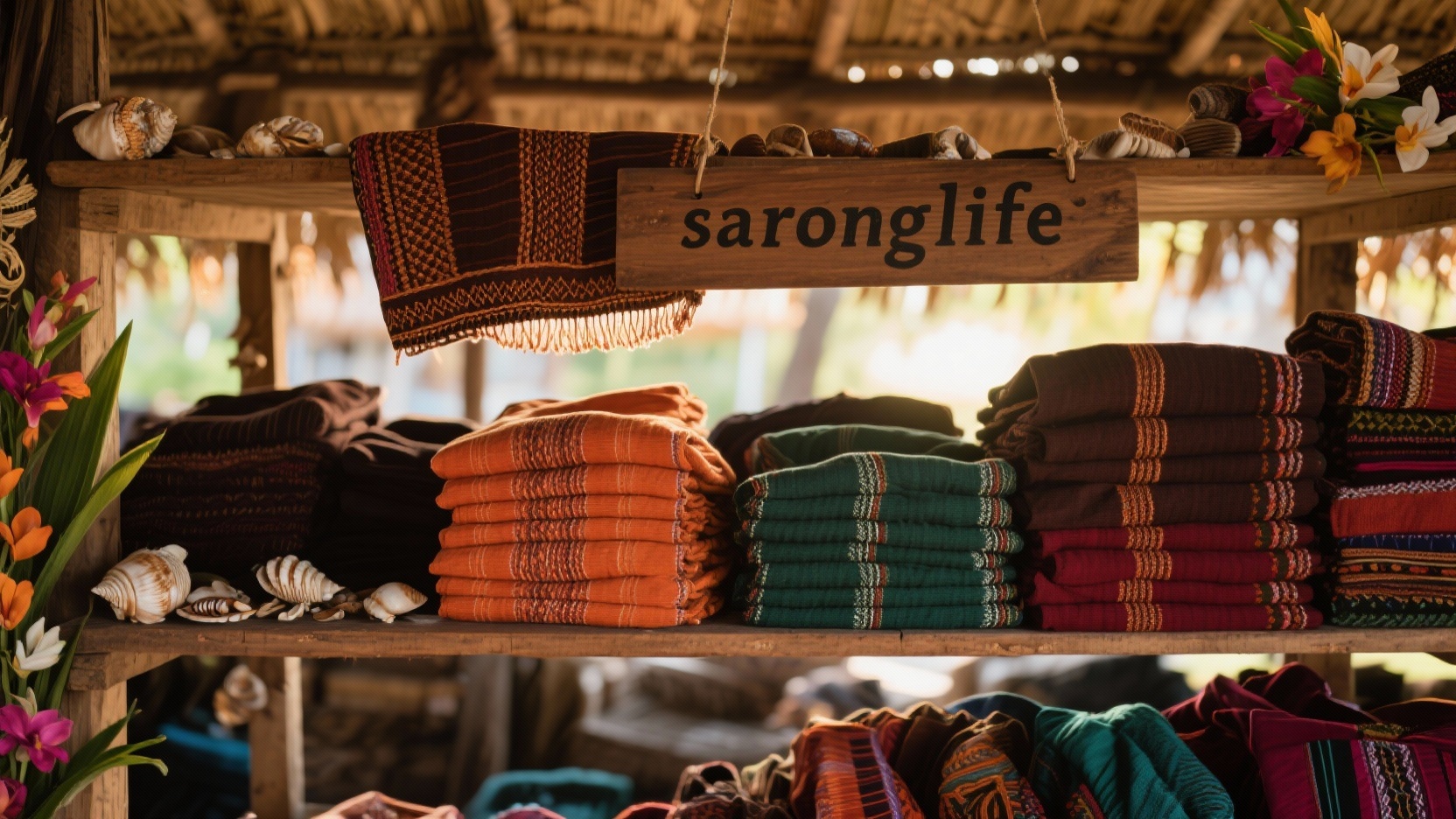
Many buyers fall into the misconception that thinner and lighter products are more breathable, but this is often at the expense of durability. There is a sarong for daily wear. It has to withstand frequent washing and wearing, so the yarn strength and dye fastness of the fabric are key indicators. The fabrics we selected have been pre-shrunk and enzymatically washed after weaving. This not only ensures dimensional stability and prevents customers from shrinking significantly after washing, but also makes the fabric softer and more breathable when used for the first time. Durability is directly related to the customer's repurchase rate and the cost of using resort linens. A durable sarong can maintain its bright color and good shape for a longer period of time.
Purchasing strategies for breathable sarongs in South Pacific resorts and retail markets
For resort buyers, when purchasing sarongs for daily wear in bulk, in addition to considering the unit price, they should also calculate the cost of a single use. It is recommended to adopt a combination strategy of “core models + seasonal models”. The core style uses classic background colors such as white, navy blue, and khaki with traditional prints to ensure high breathability and ultra-high durability. It can be used for employee uniforms or daily activities for guests. Seasonal models can introduce more vivid colors, but they must ensure the same breathability standards. For retailers, they should educate end consumers and let them know how to select based on yarn density, that is, the number of warp and weft yarns per unit inch. High-density cotton sarongs, while providing good air permeability, can also effectively prevent printing from wearing out too quickly.
An excellent daily breathable sarong is a bridge between traditional aesthetics and modern life needs. When you are making decisions about purchasing for the next season, do you value more the immediate touch of the fabric, or the reliability and cultural fit of the product throughout its life cycle? Feel free to share your purchasing standards or challenges in the comment area. If you think this article is valuable, please like it and share it with your purchasing team or peers.
