
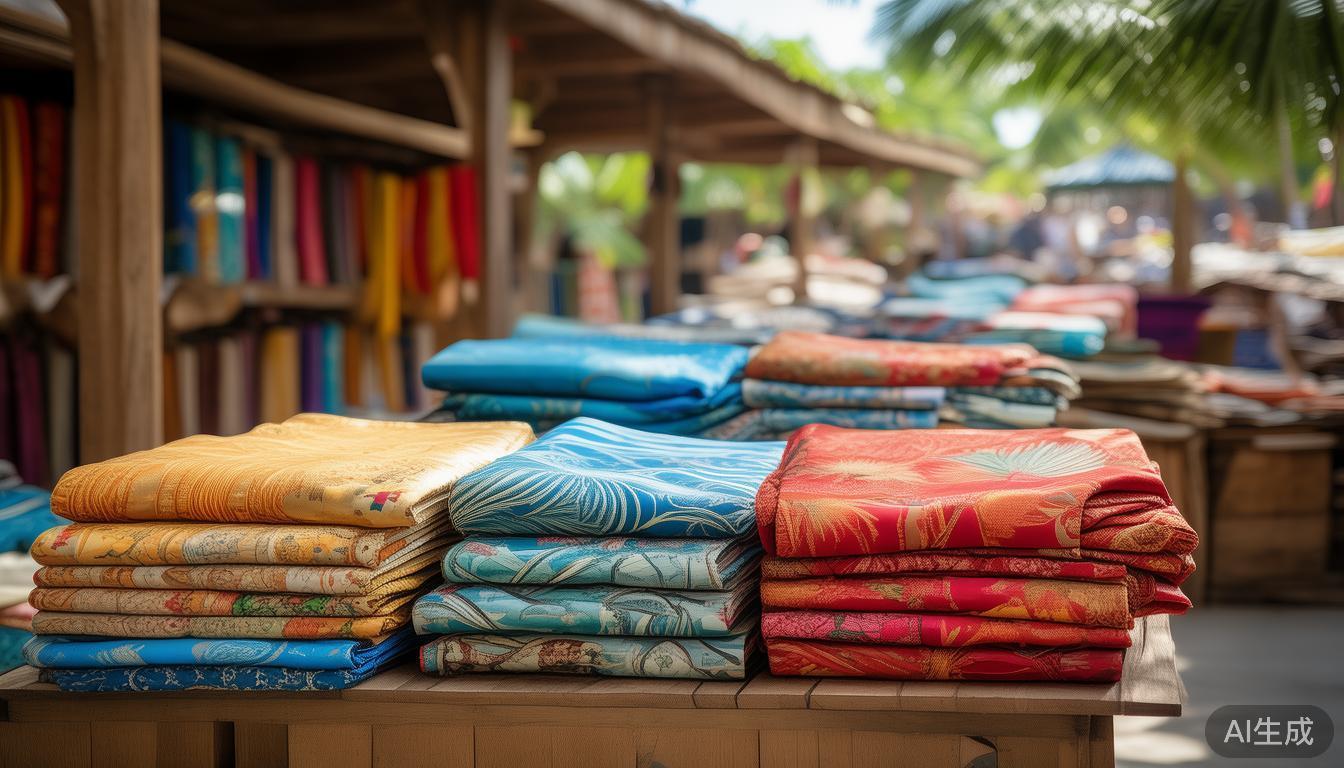
To carefully select high-quality beach skirts, such as Tupenu or Sarong, for retailers and resort partners in the South Pacific region, this is not just about purchasing an item, but also about introducing a cultural symbol and practical asset. The demand for this type of textiles is stable, but the quality of market supply varies. An in-depth understanding of its core values and practical selection strategies is the key to ensuring your profits and customer satisfaction.
How to distinguish the quality of Sarong fabrics in the South Pacific region
The key point of high-quality beach skirts is the fabric. Commonly found in the market include ordinary viscose fiber, polyester blends and traditional pure cotton. Ordinary chemical fiber fabrics are low-cost, but they are stiff to the touch and do not have breathability. They will easily look stale after being washed several times, causing damage to the experience of resort guests. It would be better to prioritize high-count pure cotton and cotton-linen blended fabrics. They are skin-friendly, breathable and highly hygroscopic, and are quite suitable for tropical climates. A more high-end choice is fabrics hand-dyed and woven using traditional techniques such as "Ikat". Its texture is unique, its color is strong and stable, and the cultural added value contained in it is extremely high. It is suitable for high-end retail stores or boutique resorts to sell as special gifts.
When wholesale fabrics, in addition to the touch, durability and color fastness are aspects that must be tested. You can ask the supplier to give a small sample for violent testing, that is, rub it repeatedly to check whether there will be pilling, and then rub it with a damp cloth to see if the color will fade. , and also simulate sun exposure to see the ability to resist ultraviolet fading. A reliable wholesaler should be able to provide the technical parameters of these fabrics, and give priority to fabrics that have been pre-shrunk and color-fixed. This can minimize the washing disputes after purchase by retail customers.
How to match traditional patterns with resort style
Beach skirts, that is, the patterns of Tupenu or Sarong, are their soul. Traditional patterns, such as the geometric patterns of Tonga and Samoa, and the "Masi" bark cloth printing of Fiji, all carry profound cultural significance. During the procurement process, it is necessary to ensure that the source of the pattern is respected. It is best to cooperate with a recognized traditional craftsman community. For resorts, these styles with authentic cultural stories can be used in special events, employee uniforms or high-end room gifts to enhance the cultural experience.

At the same time, the market has a demand for a large number of modern-style designs. When purchasing, pay attention to whether the color matching of the pattern is coordinated with the overall visual (VI) system of the resort. For example, a resort with ocean blue and beach white as its main colors can order Sarong in bulk with abstract waves or palm leaf patterns in the same color. It is recommended to maintain a 7:3 ratio of "traditional classic" and "modern resort" styles in your inventory. This can not only satisfy tourists' pursuit of authenticity, but also cover the huge demand generated by daily use.
How to control costs and inventory with bulk purchasing Sarong
It does not mean sacrificing quality to control costs. For resorts with large consumption, it is fundamental to cooperate directly with the source wholesaler who owns the factory and skip the intermediate links. You can consider adopting the purchasing model of “core basic models + seasonal popular models”. For basic models, choose solid colors such as black, dark blue, and ivory white, or classic dark patterns. Order in large quantities at a time to lower the unit price and meet practical needs such as standard guest room configurations and restaurant aprons. Seasonal popular models are purchased in small batches and in multiple colors, and used in retail stores or promotional activities to quickly respond to market changes.
Regarding inventory management, it is recommended to adopt a "central warehouse + real-time replenishment" system. You need to make an agreement with your supplier to maintain a basic safety stock in your main warehouse. At the same time, the supplier can support rapid small-batch replenishment of specific colors (for example, within 15 days). This will greatly ease your warehousing pressure and reduce the risk of slow sales. A reliable supply contract should include a clear delivery date, minimum order quantity (MOQ), and replenishment terms. This is the cornerstone of long-term cooperation and trust.
When your resort or store introduces beach skirts Tupenu/Sarong to customers, is it the story about its cultural background that is most often asked, or is it the practical function of being able to be worn in multiple ways? Welcome to share your experience in the comment area. If you think these procurement strategies are valuable, please like them and share them with your procurement colleagues.
